AI tools help us draft; people check every fact before it publishes.
Quick answer (TL;DR)
Kayaking the Chestatee River in Georgia offers a scenic, beginner-friendly paddle through the Appalachian foothills. The water mostly features gentle currents and Class I rapids, making it ideal for recreational kayaks. You can bring your own boat to public access points or rent gear from local outfitters near Dahlonega.
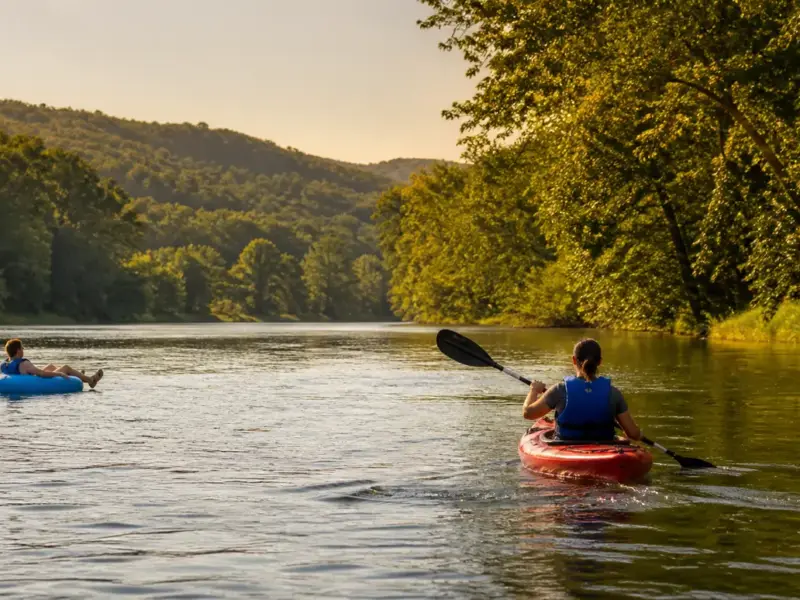
Paddling the Chestatee River gives you a front-row seat to the natural beauty of North Georgia. The clear water winds through thick forests and rocky shoals, providing a relaxing escape just outside Dahlonega.
Why the Chestatee is perfect for recreational kayaking
The Chestatee River offers a specific kind of paddling experience. You will not find massive whitewater here. Instead, you get a steady, manageable current that does most of the work for you. This makes it an excellent choice for beginners and families. It is also great for anyone who just wants a peaceful afternoon on the water.
The scenery is a major draw. The river cuts through the Appalachian foothills. Thick tree canopies shade the banks. You can often spot blue herons wading in the shallows or turtles sunning themselves on fallen logs. It feels remote, even though you are only a short drive from town.
The water quality also stands out. The river runs clear over a rocky bottom. On sunny days, you can look right down and see the fish swimming below your boat. This clarity makes the entire experience feel much more connected to nature.
Understanding the water and rapids
Most of the Chestatee consists of flat water mixed with gentle shoals. You will encounter occasional Class I rapids. These are small ripples and easy drops that add a little excitement without requiring advanced technical skills.
Water levels dictate the experience. After a heavy rain, the river moves faster and covers the rocky shoals. During dry spells, the water drops. Low water means you might scrape the bottom of your kayak on the rocks. You might even have to step out and pull your boat over shallow sections.
We always suggest reviewing a Chestatee River conditions guide before loading up your gear. Knowing the current water level helps you decide which section of the river to paddle and what type of boat to bring.
Planning your route and logistics
A successful kayak trip requires a solid plan. Since rivers flow one way, you need a reliable way to get back to your starting point.
If you own your kayaks, you will need to set up a shuttle. This involves dropping one vehicle at your takeout spot and driving a second vehicle up to your launch point. This takes a little extra time in the morning. However, it gives you total freedom over your schedule.
There are several popular stretches to paddle. Some sections take two hours. Other routes can fill an entire day. You can map out your exact float using a Chestatee River kayaking routes breakdown.
Public access points
Lumpkin County maintains several spots where you can put a boat in the water. These areas usually have gravel parking lots and a dirt path leading down to the riverbank.
Arrive early if you plan to paddle on a summer weekend. The parking areas fill up fast. If you want to avoid the crowds, try launching on a Tuesday or Wednesday morning. You will likely have the water entirely to yourself.
Finding the right launch and takeout is critical. Missing your takeout means a long, difficult paddle back upstream or an unexpected extended trip downstream. Keep a Chestatee River access points map handy on your phone to track your progress.
Renting gear from local outfitters
You do not need to own a boat to enjoy the river. Several local businesses operate along the banks and provide everything you need for a day on the water.
Renting is the easiest option for visitors. You pay a fee, and the outfitter hands you a kayak and a paddle. They will also provide a life jacket. They handle the transportation for you. You park at their facility, they drive you upstream in a bus, and you float back down to your car.
Different companies offer different trip lengths. Some focus on short, family-friendly floats. Others offer longer excursions. You can compare the options by checking out the Chestatee River outfitters in the area.
Choosing the right kayak
The type of boat you use changes the experience. Sit-on-top kayaks are the most popular choice for the Chestatee. They are incredibly stable and easy to get in and out of. If you hit a rock and tip over, a sit-on-top kayak will not fill with water. You just flip it back over and climb on.
Sit-in recreational kayaks also work well. They keep you a bit drier. This is nice if you paddle in the early spring or late fall when the air is cool.
Leave the long, narrow touring sea kayaks at home. The Chestatee has tight turns and shallow rocky sections. You want a shorter boat that turns quickly and can take a few scrapes against the riverbed.
What to pack for a river day
Packing correctly makes the difference between a great day and a miserable one. The sun reflects off the water, so you need more protection than you think. Bring sunscreen and a wide-brimmed hat. You should also pack sunglasses with a retention strap. If you drop your sunglasses in the river, they are gone forever.
Footwear is important. Do not wear flip-flops. They will float away the second you step into the current. Wear water shoes or old sneakers that lace up tight. You need solid footing when walking on slippery river rocks.
Bring plenty of drinking water. Paddling is a workout, and the Georgia heat will dehydrate you quickly. Pack your phone and keys in a reliable dry bag. Ziploc bags often fail when submerged.
Kayak fishing on the Chestatee
Many people paddle the river specifically to fish. The Chestatee holds a healthy population of fish. A kayak lets you reach spots that bank anglers cannot access.
You can quietly drift into deep pools and cast under overhanging branches. A specialized fishing kayak with rod holders makes this much easier.
Just remember to secure your gear. A sudden bump against a submerged log can easily send a loose fishing rod into the drink. Keep your tackle box closed and latched when you are moving between spots.
Safety on the water
The Chestatee is generally a safe, forgiving river. It still requires respect. Always wear your life jacket. State law requires you to have one in the boat, but it does no good if you are sitting on it when you flip.
Watch out for strainers. A strainer is a fallen tree or branch resting in the water. The current flows through the branches, but a kayak cannot. If the water pushes you into a strainer, it can flip your boat and pin you underwater. Always steer clear of downed trees.
Never paddle alone. Bring a friend, tell someone your float plan, and know your limits.
The seasons on the water
Spring brings higher water levels from seasonal rains. The current moves faster, making the paddle less strenuous. The trees begin to bud, and the weather is cool and comfortable. You will want a sit-in kayak or splash gear to stay warm.
Summer is the peak season. The water feels refreshing against the Georgia heat. This is the best time for families and casual paddlers. Summer also brings the biggest crowds and the lowest water levels. You might have to navigate around shallow rocks.
Fall offers the most beautiful scenery. The leaves change color, reflecting bright oranges and yellows off the water. The air is crisp. The crowds thin out significantly after Labor Day. Fall paddling requires careful planning regarding daylight, as the sun sets much earlier behind the mountains.
River etiquette and respecting private property
The Chestatee flows past many private homes and cabins. While the water itself is public, the banks are often private property. You should never pull your kayak onto a private dock or walk up into someone’s yard.
Keep your noise levels reasonable. Sound travels easily over water. People live on the river to enjoy the peace and quiet.
Pack out all of your trash. Do not leave empty water bottles or snack wrappers in the river. If you see trash floating by, do the river a favor and pick it up.
Making a weekend out of your trip
A kayak trip pairs perfectly with a weekend stay in the area. Dahlonega sits just minutes from the river. After a long day of paddling, you can head into town for a great meal and a comfortable bed.
Many visitors fall in love with the area after seeing it from the water. The combination of mountain views and river access is hard to beat.
If you find yourself wanting to stay permanently, you can reach out to the local experts at Gold Peach Realty to explore properties along the water. They know the area and can help you find the right spot.
Frequently Asked Questions
Do I need experience to kayak the Chestatee River?
The river is very beginner friendly. The current is usually gentle and the rapids are small. You do not need prior experience to enjoy a basic float.
Are there dangerous rapids on the Chestatee?
Most of the river features flat water and Class I rapids. These are small ripples that are easy to navigate. You will not find massive whitewater here.
Can I bring my dog in the kayak?
Many people paddle with their dogs. You just need a stable sit-on-top kayak and a dog that is comfortable on the water. Always equip your dog with a canine life jacket.
How long does a typical kayak trip take?
Trip lengths vary based on your launch and takeout points. A short trip might take two hours. A longer excursion can easily fill an entire afternoon.
Is the water cold?
The water temperature changes with the seasons. It feels very cold in the early spring. By mid-summer, the water warms up and feels refreshing.
Do I need a permit to paddle the river?
You do not need a special permit to paddle. The water is open for public recreation. You only need to follow standard Georgia boating regulations.
What happens if the water level is too low?
Low water means you will likely scrape the bottom of your kayak on rocks. In very shallow sections, you might have to step out of your boat. You will need to walk your kayak through the shallow water until it gets deep enough to float again.
Can I use an inflatable kayak?
Inflatable kayaks work well on this river. They are easy to transport and handle the gentle rapids without issue. Just be careful around sharp rocks and fallen branches to avoid punctures.
Are there places to stop and eat along the river?
There are no restaurants directly on the riverbanks. You should pack your own snacks and drinks in a cooler. You can eat on your kayak or pull over at a public access point.
What should I do if my kayak flips?
Stay calm and hold onto your paddle. Stand up if the water is shallow. If it is deep, swim your boat toward the nearest bank. Flip the kayak back over and climb in.
Can I fish from my kayak?
Kayak fishing is very popular here. The river holds a variety of fish species. A specialized fishing kayak makes it easier to manage your rods and tackle.
Is the river crowded on weekends?
Summer weekends draw the largest crowds. The public parking areas fill up quickly. If you want a quiet experience, plan your trip for a weekday morning.
Looking for homes in North Georgia? Visit Gold Peach Realty at goldpeachrealty.com, your local experts in Dahlonega, Gainesville, and the surrounding mountain communities. Call (770) 283-1223.
North Georgia Real Estate
Looking for Homes on the Chestatee River?
Gold Peach Realty are the local experts in Dahlonega and Lumpkin County real estate. Search riverfront properties, mountain cabins, and North Georgia homes.