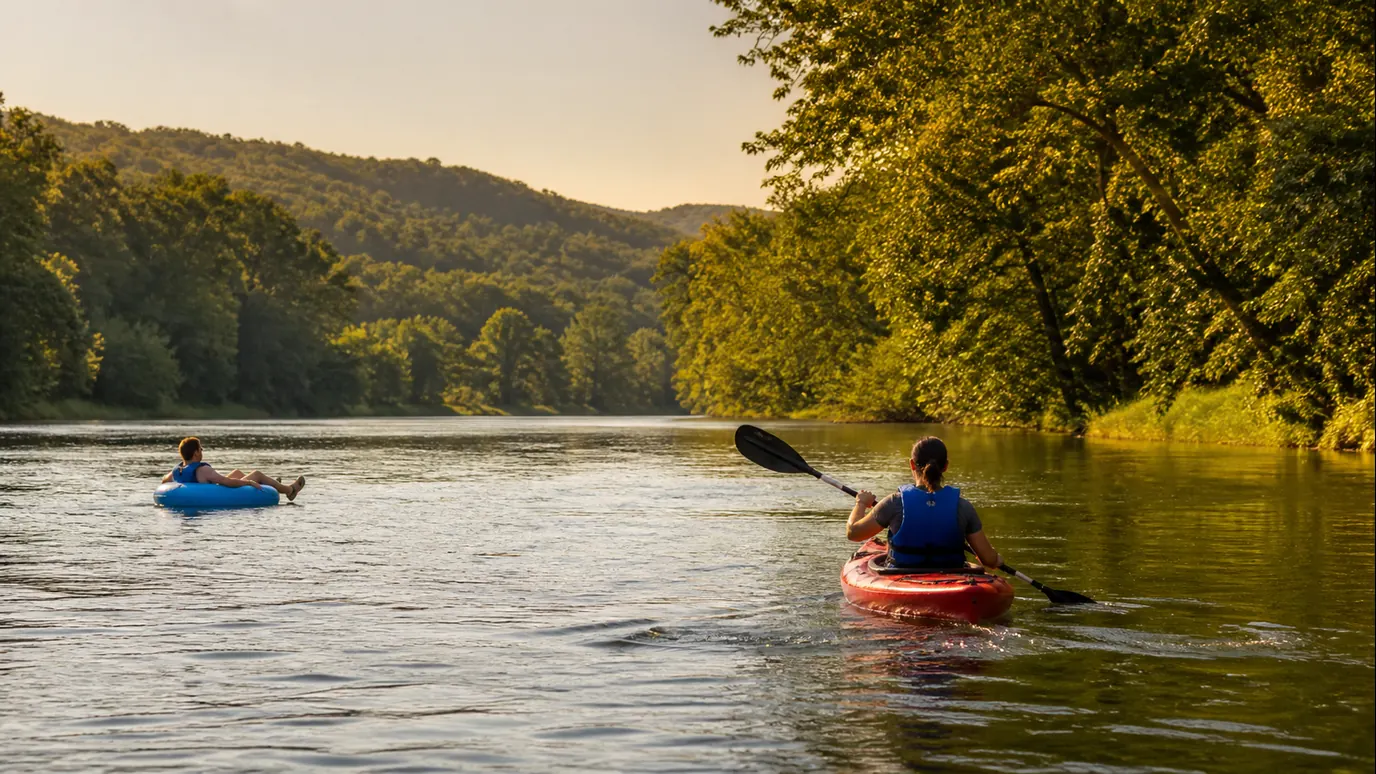
Choose tubing for a relaxed float and kayaking when you want steering control and a more active trip. On the Chestatee River, either choice depends on legal access, a confirmed takeout, current flow, weather, and the paddler’s experience. Check the USGS gauge and local outfitter advisories on trip day, wear a properly fitted life jacket, and never assume a familiar reach is safe after rain.
Tubing suits a slow float, while a kayak gives you more control. Check water conditions, legal access, weather, and your takeout plan before entering the Chestatee River.
Should you tube or kayak the Chestatee River?
The answer starts with the kind of day you want. A tube lets the current do most of the work. That can be pleasant on a gentle, familiar reach with a clearly arranged exit. It also means you have less ability to move around shallow rocks, strainers, bridge debris, or a faster channel. A recreational kayak takes more effort, but the paddle and hull give you useful control over direction and speed.
New visitors sometimes treat the choice as a matter of comfort alone. The river makes the final decision. Flow, recent rain, water temperature, changing obstructions, and the ability of everyone in the group matter more than the label on the boat. Our broader Chestatee River tubing and kayaking guide explains the shared planning basics. The comparison below helps you choose a craft for the day you have actually planned.
| Question | Tubing | Kayaking |
|---|---|---|
| How much control do you want? | Limited steering; the current sets most of the line. | A paddle gives you more control over position and direction. |
| How active should the trip feel? | Mostly passive floating, with occasional kicking or hand paddling. | Continuous balance, reading the water, and purposeful strokes. |
| What gear matters most? | A suitable river tube, fitted life jacket, footwear, and a secure way to carry essentials. | A suitable kayak, paddle, fitted life jacket, footwear, and secured dry storage. |
| Who should make the call? | The least experienced participant and current conditions should set the limit. | Each paddler should be able to control the kayak in the conditions expected. |
Tubing asks less of your arms, but it does not automatically make a river trip simpler. You still need a legal launch, a known takeout, a shuttle, suitable water, and a way to avoid hazards. A kayak takes more technique and gives the paddler more control when the river calls for a deliberate line.
Build the route before you pack the car
The Chestatee runs through a mix of public and private land. A road crossing is not a blanket invitation to park, walk across private property, or launch from any visible bank. Confirm the launch and takeout with a current public source or a local outfitter before leaving home. The Dahlonega Visitors Center publishes a local canoe, kayak, and tubing overview, but access details and operator schedules can change.
Start with a reach that matches the least experienced person in the group. Then work backward from the takeout. Who will move the vehicle? Is parking allowed? Can everyone recognize the exit from the water? Does the group have a missed-takeout plan? If any answer is vague, the route is not ready.
- Choose one defined reachUse a current map or outfitter route description. Do not stitch together partial directions from old posts or social comments.
- Confirm legal accessVerify both banks you plan to use, parking rules, operating hours, and any local closure notice.
- Set the shuttlePlace the takeout vehicle first or book a current shuttle. Keep keys secured in a waterproof setup.
- Mark the exitEvery adult should know what the takeout looks like and what landmark comes immediately before it.
- Share the planTell someone off the river where you are launching, where you plan to exit, who is with you, and when to expect a check-in.
A route that worked last season may have a different obstruction, parking rule, operator schedule, or exit condition now. Reconfirm the whole plan on the morning of the trip.
Check Chestatee River conditions on trip day
The most important conditions check happens shortly before launch. The USGS Chestatee River gauge near Dahlonega reports provisional water data. A gauge number has no universal “safe” meaning by itself. Compare it with current local guidance, the weather forecast, recent rainfall, and the reach you intend to use.
Low water can expose more rocks and turn a float into a slow series of scrapes and short walks. Higher or faster water can reduce reaction time, cover familiar reference points, and carry debris. Cold water adds another concern even when the air feels warm. If the water looks different from what the group expected, pause and reassess from shore.
Do not launch because the sky has cleared. Runoff can arrive after the storm, and a tributary can change conditions downstream. Check the gauge, the forecast, and a current local advisory. When those sources disagree or the group is uncertain, choose a land-based day instead.
A good river plan leaves plenty of room to turn around before anyone gets wet.
The existing Chestatee River conditions guide explains how to read flow, weather, and visual clues together. It is a better starting point than relying on one number or a photo from another day.
Pack for control, visibility, and a wet exit
Wear a properly fitted life jacket designed for the activity. It should be fastened before launch and stay on until everyone is clear of the water. Georgia DNR maintains a current required equipment checklist for vessels. Read the current rules for your craft and group instead of relying on a borrowed checklist.
Footwear should protect against sharp rocks and stay on in moving water. Put car keys, identification, and any essential medication in a secured waterproof container. Bring drinking water and sun protection, but keep loose bottles and wrappers out of the river. A whistle attached where it can be reached is more useful than one buried in a bag.
Phones need a waterproof case and a secure attachment. A phone can help with communication, but reception is not a rescue plan. Keep the group together, set simple signals before launch, and make sure each person knows what to do if someone flips, misses the exit, or becomes separated.
For a tubing group
Choose river tubes built for moving water rather than lightweight pool toys. Do not tie people together. A connected line can wrap around a rock, tree, bridge support, or other obstruction. Each person needs independent movement and enough space to react.
For a kayaking group
Match the kayak to the planned reach and the paddler. Practice basic forward, reverse, and turning strokes in calm water before committing to a river run. Secure the paddle and gear without creating straps or lines that can snag during a capsize.
Make the trip work for the whole group
A mixed group can still have a good day, but it should not split into fast paddlers and drifting tubes without a shared plan. Choose a pace that keeps everyone visible. Put a steady, experienced adult near the front to read the route and another near the back to watch the group. Stop only where access is legal and the bank can be approached without trampling vegetation or crossing private property.
Children and inexperienced adults change the calculation. Consider a guided or outfitter-supported trip when the route is new to the group. Ask direct questions about the planned reach, current water, equipment, age or size limits, shuttle details, cancellation policies, and what happens when conditions change.
There are other river activities to pair with a North Georgia weekend. Our guide to things to do on the Chestatee River covers quieter options for days when a float is not a good fit. A trail, picnic, or downtown Dahlonega stop is a perfectly good pivot when the water says no.
Leave the Chestatee cleaner than you found it
Pack out every item you bring, including broken sandals, punctured tubes, food wrappers, and fishing line found at the bank. Avoid dragging boats across planted areas or cutting a new path to the water. Keep voices low near homes and other river users. Give anglers, swimmers, and paddlers enough room to follow their own line.
Do not enter private land to retrieve gear without permission. If an item is caught in a dangerous current or obstruction, do not create a second emergency trying to save it. Note the location from a safe place and contact the appropriate local authority or outfitter for guidance.
The Chestatee is a working river corridor, not a managed amusement ride. Treating access, neighbors, wildlife, and changing water with care is what keeps a simple float from becoming a problem for the next visitor.
Frequently Asked Questions
Is tubing or kayaking better on the Chestatee River?
Tubing fits a relaxed float on a gentle, confirmed reach. Kayaking fits paddlers who want more control over direction and pace. Current flow, weather, legal access, and the least experienced participant should decide which option makes sense.
Can beginners kayak the Chestatee River?
A beginner should choose a reach that a current local source describes as appropriate for beginners and should consider outfitter support. Basic steering and recovery skills should be practiced in calm water first.
Can you bring your own tube to the Chestatee River?
That depends on the launch, takeout, parking rules, and the suitability of the tube for moving water. Confirm each detail before going. A pool float is not a substitute for equipment intended for river use.
Where should you launch and take out?
Use currently confirmed public access or an outfitter-managed route. Do not assume a road crossing, visible pull-off, or open bank is legal access. Arrange the takeout and shuttle before launch.
How do you check Chestatee River water levels?
Check the USGS Chestatee River gauge near Dahlonega, then compare it with recent rainfall, the forecast, and current local advice. A gauge reading alone cannot tell every group whether a reach is suitable.
Is the Chestatee River safe after rain?
Conditions can change during and after rain. Runoff may raise or speed the river and carry debris. Check live data and local advisories, inspect from shore, and postpone when conditions or guidance are unclear.
Do you need a life jacket for tubing or kayaking?
Wear a properly fitted life jacket for either activity. Georgia DNR publishes current equipment requirements for vessels. Check the current rule for your craft and keep the jacket fastened on the water.
What shoes work for a Chestatee River trip?
Wear secure water shoes that protect the sole and stay on in moving water. Loose flip-flops can wash away, while bare feet are exposed to sharp rocks and debris.
Should tubes be tied together?
No. Connecting tubes can create an entanglement hazard around rocks, trees, bridge supports, or other obstructions. Keep each person independent and leave room to move.
What should you do if the takeout is missed?
The group should have a missed-takeout plan before launch. Stay together, move toward a safe legal landing only when conditions allow, and contact the agreed support person or emergency services when needed.
Can you stop anywhere along the riverbank?
No. Much of the riverbank is private. Stop only where access is legal and safe. Do not cross fences, yards, or posted property to rest or retrieve equipment.
What if tubing or kayaking conditions are poor?
Choose another activity and come back on a better day. The Chestatee area has trails, parks, fishing, history, and Dahlonega attractions that do not require committing to moving water.
Thinking About Living Near the Chestatee River?
Gold Peach Realty can help you explore homes and cabins near the river while you verify access, property boundaries, and the practical details that matter to you.
Browse Chestatee River, Dahlonega, North Georgia real estate with Gold Peach RealtyNorth Georgia Real Estate
Looking for Homes on the Chestatee River?
Gold Peach Realty are the local experts in Dahlonega and Lumpkin County real estate. Search riverfront properties, mountain cabins, and North Georgia homes.