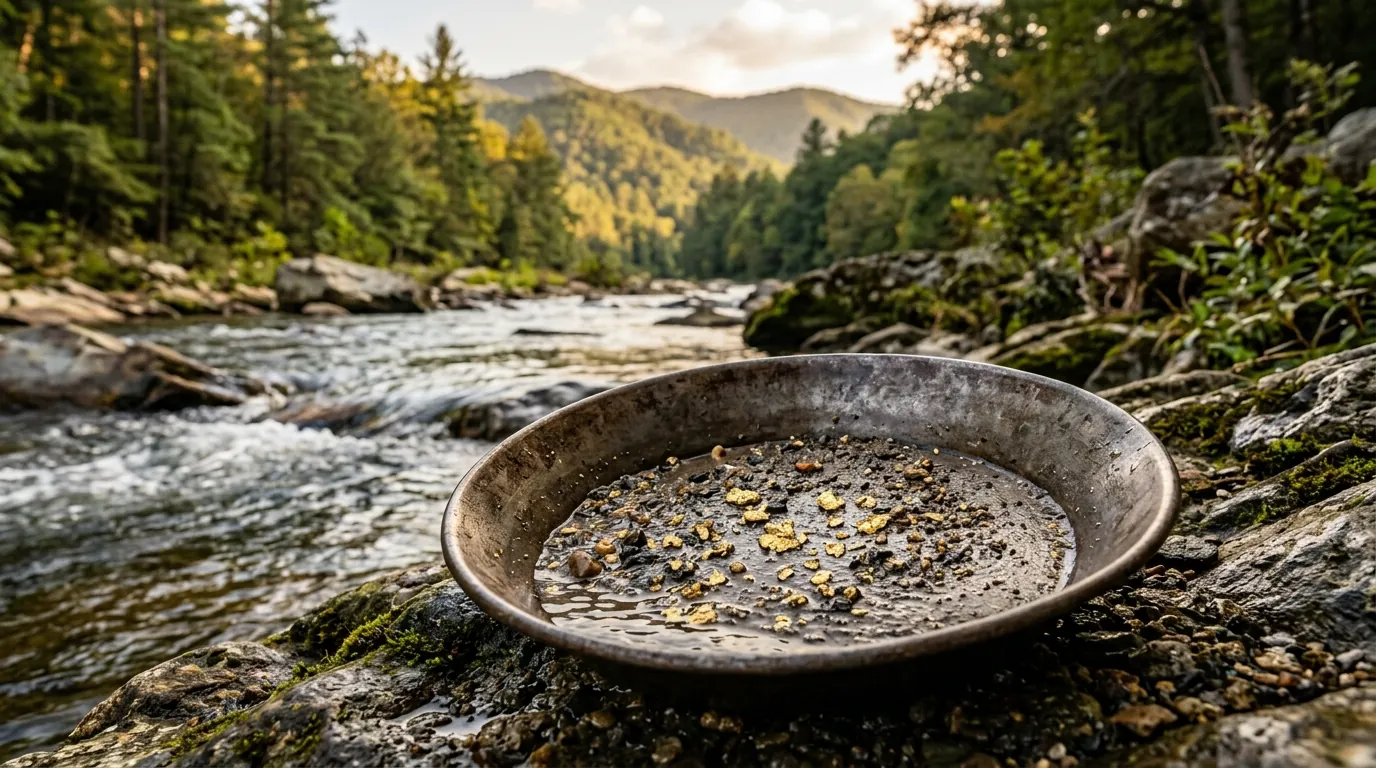
Gold panning on the Chestatee River near Dahlonega offers an authentic experience in America’s original gold country. Visitors can try hands-on panning at historic mines or explore allowed stream locations along the river. While most panners find flour gold or small flakes, the rich geological history and beautiful North Georgia scenery make recreational prospecting a memorable mountain adventure.
The Chestatee River and its North Georgia tributaries run through the heart of America’s original gold country, where recreational prospectors still find fine gold in mountain gravels today.
Geology and History of Chestatee River Gold
The Chestatee River drains terrain underlain by the Dahlonega gold belt — a geological formation stretching roughly 50 miles across the North Georgia mountains that produced one of the most significant gold rushes in U.S. history. Learn more about the Dahlonega Gold Rush — America First Gold Rush on the Chestatee River to understand how quartz veins freed gold particles into stream gravels over millions of years.
When Benjamin Parks discovered gold in 1828, Chestatee River tributaries like Ward’s Creek, Cane Creek, and Yahoola Creek saw intensive placer mining. By the early 1830s, prospectors worked the gravels using pans, rockers, and sluice boxes. The U.S. Mint in Dahlonega, which opened in 1838 and operated until 1861, processed much of this local gold into coinage before hard-rock mining continued into the early 20th century.
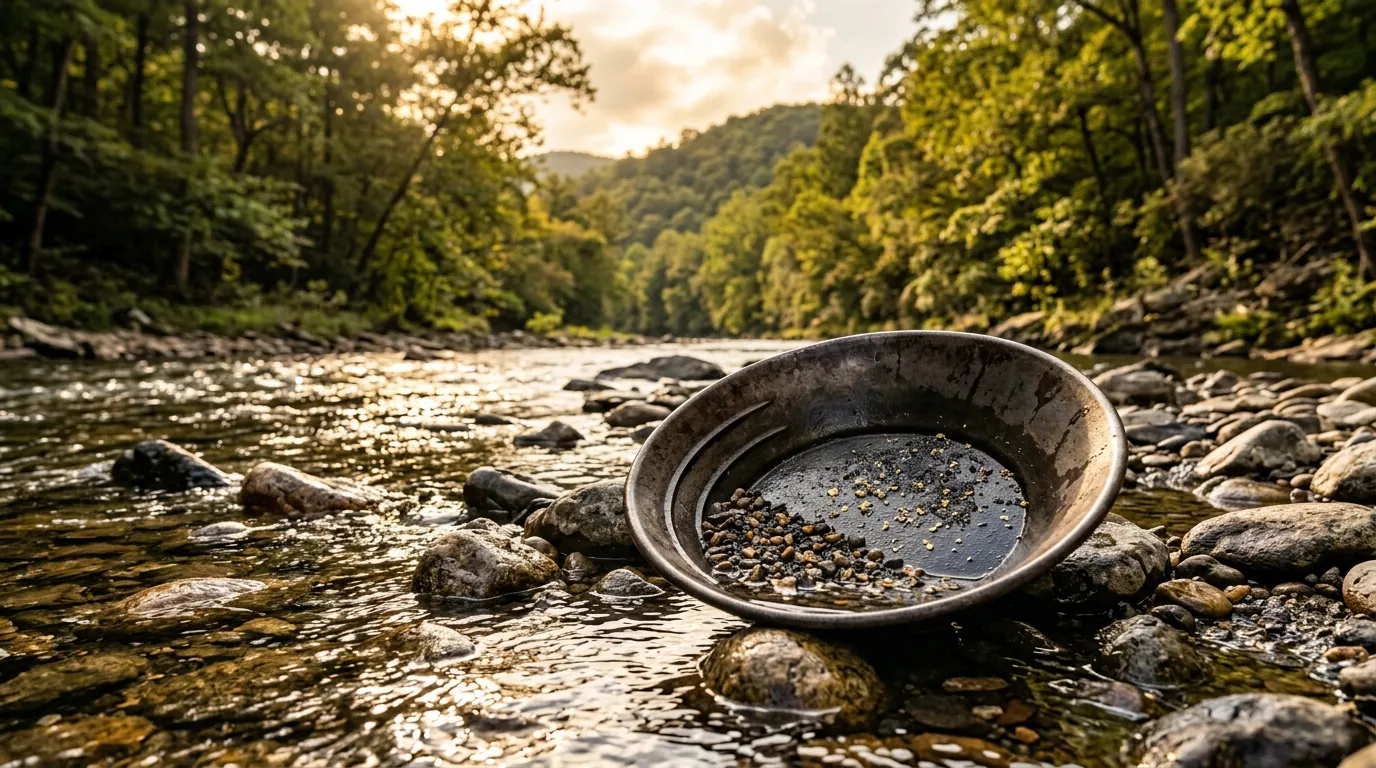
Gold concentrates in natural traps along the river bed, including the downstream side of large boulders, the inner curves of river bends, and gravel bars accumulated behind bedrock obstructions.
How to Pan for Gold on the Chestatee
Gold panning requires minimal equipment and is accessible to complete beginners. Technique matters far more than gear, and most beginners can master the motion in 15–20 minutes of practice.
- Step 1 Gather basic gear including a standard 14–16 inch diameter plastic or metal pan, a small garden trowel, a snuffer bottle, and season-appropriate water shoes or waders.
- Step 2 Sample gravels from natural river traps, such as gravel bars, river bends, or behind bedrock obstructions.
- Step 3 Use water and a gentle circular motion to wash lighter material over the pan’s rim while heavy gold concentrates in the bottom riffles.
If you are planning an outing, combine prospecting with other outdoor highlights using What to Do on the Chestatee River: A Resident’s Guide or explore our tubing-kayaking-guide/”>Chestatee River tubing and kayaking guide .
Crisson Gold Mine and Consolidated Gold Mine offer accessible panning near the Dahlonega town square. Crisson features pre-seeded trough panning, while Consolidated pairs underground tours with hands-on panning stations.
Regulations and What You Can Find
Realistic expectations are key for recreational prospectors. Most panners find flour gold — extremely fine particles — along with occasional small flakes. While nuggets are rare, ongoing natural erosion continuously uncovers fresh material in stream beds.
Hand panning is generally allowed on public streams without a permit, but mechanical equipment like sluice boxes or dredges requires authorization. Private land requires express permission, and National Forest streams strictly limit taking gold to personal use limits under one ounce per day.
Living in North Georgia Gold Country
For buyers captivated by the region’s rich history and natural scenery, owning riverfront property near Dahlonega offers a unique lifestyle. Review Living on the Chestatee River: What Buyers Need to Know or view available Chestatee River waterfront homes in North Georgia to find your own piece of gold country.
Frequently Asked Questions
Can you still find gold in the Chestatee River?
Yes, amateur prospectors regularly find traces of placer gold, mostly flour gold and small flakes, in the Chestatee River drainage.
Do you need a permit to pan for gold in Georgia?
Hand panning is generally allowed on public land streams without a permit, but mechanical equipment requires authorization and private land requires express permission.
Where are the best places to pan near Dahlonega?
Guided mines like Crisson and Consolidated offer pre-seeded trough panning, while stream panning occurs at permitted public recreation spots and mining claims.
Explore Chestatee River Properties
Find your home along North Georgia’s historic gold country.
Search North Georgia homes with Gold Peach Realtyor call (770) 283-1223