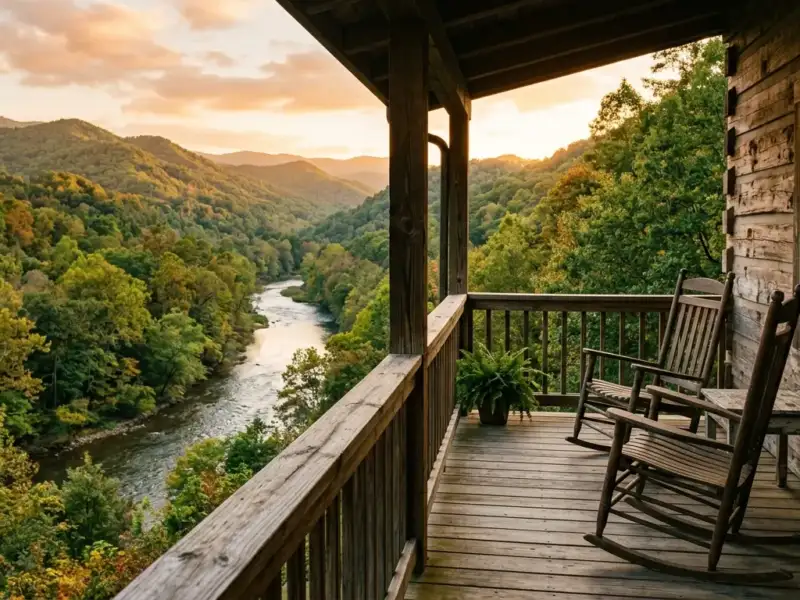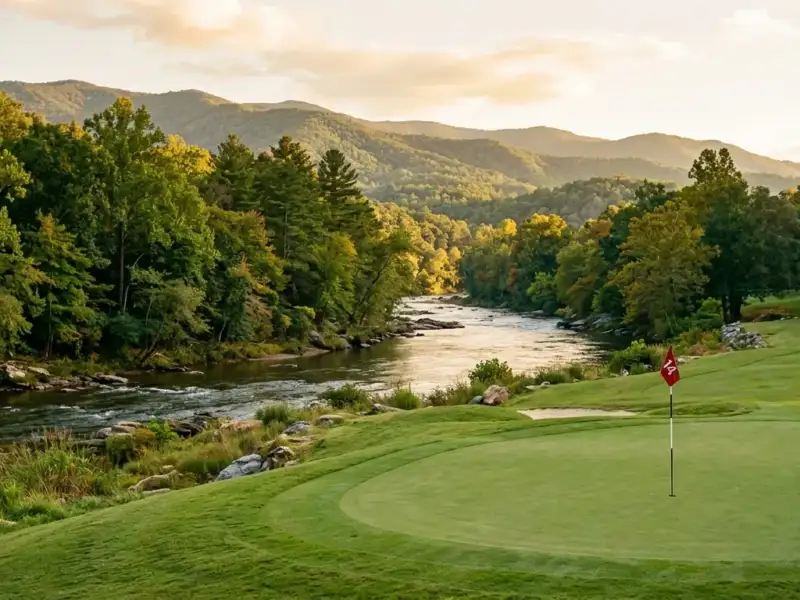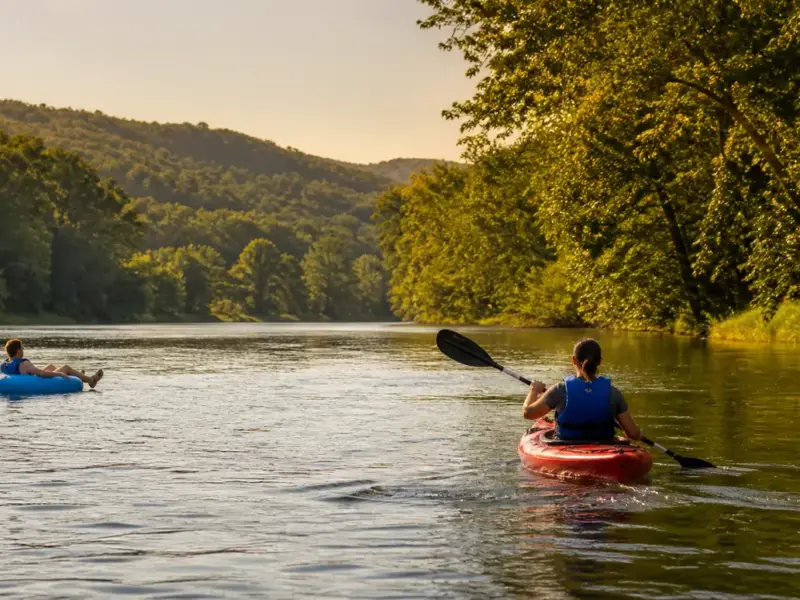
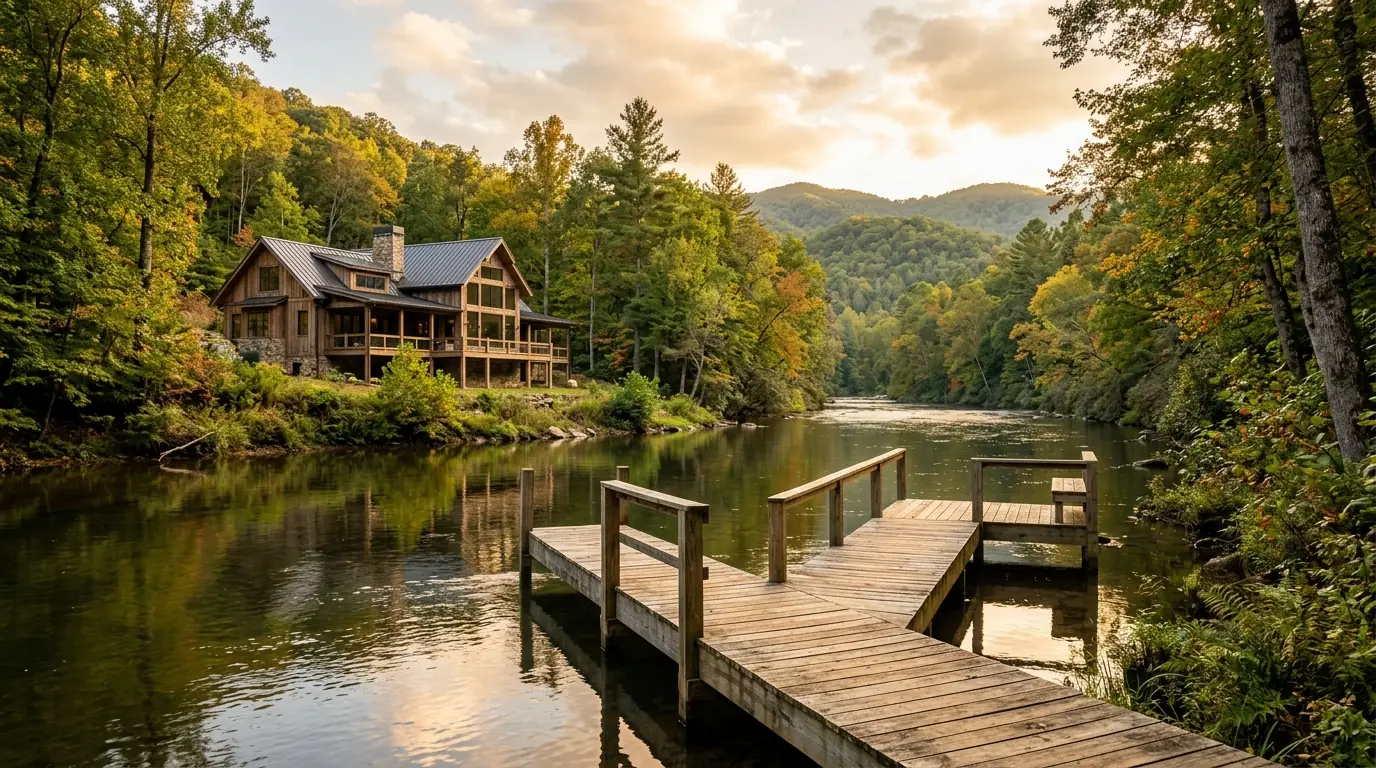
Buying property along the Chestatee River ranges from small mountain acreage to luxury homes in gated neighborhoods like Achasta. Success requires understanding true river boundaries, Georgia riparian rights, state stream buffers, and flood zones. Working with a local North Georgia real estate agent helps buyers navigate off-market listings, zoning, land permitting, utility connections, and septic requirements for mountain terrain.
Waterfront real estate near the Chestatee River is among the most sought-after property in North Georgia, offering buyers rustic cabins, permanent riverfront homes, and buildable land.
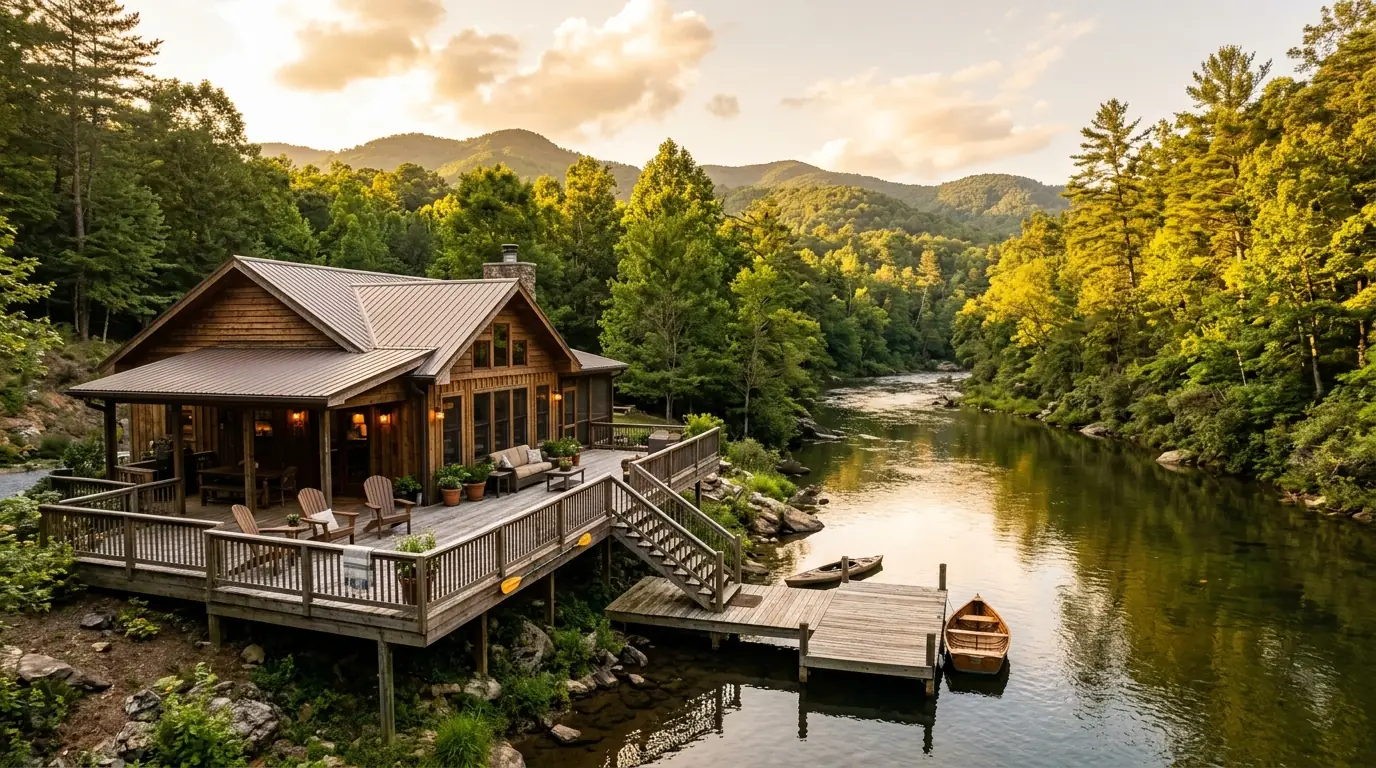
Types of Chestatee River Properties
Waterfront real estate near the Chestatee River is among the most sought-after property in North Georgia. Whether you are looking for a rustic weekend cabin, a permanent riverfront home, or raw land to build on, understanding this market before making an offer is essential. The market spans a broad spectrum ranging from mountain land to established riverfront residences.
When evaluating market options, buyers often weigh riverfront vs. golf community settings to determine which lifestyle best fits their goals.
| Property Category | Typical Setting | River Access & Features |
|---|---|---|
| Entry-Level Parcels | 2 to 5 acres in rural Lumpkin County | Seasonal creek access or proximity to main river channel |
| Mid-Tier Properties | Larger wooded tracts | Direct riverfront, established homes, and horse facilities |
| Luxury Estates | Gated settings like Achasta Golf Community | Private river access, high-end finishes, and community amenities |
True riverfront property actually touches the river bank, whereas river-view property offers elevated views from a distance, and river-area property includes shared community amenities.
Buyers should clearly understand what “river access” means for any given listing. These three categories carry meaningfully different values and use rights, so ask your agent to clarify access before scheduling a showing. Undeveloped land is also actively traded, with buyers acquiring lots to build custom mountain homes suited to the terrain. For a broader overview, see our detailed guide on what buyers should know about Chestatee River real estate .
Water Rights and Georgia Land Regulations
In Georgia, water rights for rivers generally follow the riparian doctrine — property owners whose land borders a waterway have certain rights to use that water for recreational and domestic purposes. The state retains navigational rights on navigable waterways and maintains public access at designated spots.
If you are purchasing land specifically for river access, confirm in the legal description that the property boundary actually touches the river bank. Satellite imagery and tax maps do not always tell the full story; a professional survey is essential.
Georgia requires a 25-foot undisturbed vegetative buffer from any stream bank under the Erosion and Sedimentation Control Act. This buffer limits how close structures, cleared areas, and septic systems can be placed to the water.
Understanding environmental constraints before purchasing can prevent unpleasant surprises during the building permit process. For those interested in long-term ownership and daily mountain river life, explore living on the Chestatee River .
Pricing Drivers and Finding the Right Property
Riverfront and river-adjacent properties in Lumpkin County trade at a meaningful premium over comparable landlocked parcels. Demand from Atlanta-area buyers — roughly 65-70 miles south — has been a consistent driver, and the market has deepened as remote work has increased buyer flexibility on commute distance. Raw riverfront land prices vary considerably depending on tract size, accessibility, utility status, and whether the land is buildable. Values have generally trended upward over the past decade as North Georgia mountain real estate has attracted broader regional attention. To see current opportunities, explore Chestatee River homes for sale .
Many Chestatee River properties are sold through local brokerages before appearing on national listing portals. Buyers curious about the business side can see what a modern brokerage platform covers, from first response through closing. A local agent provides contextual knowledge to evaluate what a property’s water access is truly worth, while advising on flood zone classification, utility extension costs, and well and septic maintenance in mountain terrain. For more comprehensive listing information, visit Chestatee River Real Estate — Riverfront Homes and Land in North Georgia .
Frequently Asked Questions
Can I get financing on riverfront land in North Georgia?
Yes, though lenders treat raw land loans differently than conventional home mortgages — interest rates and down payment requirements are typically higher. Construction-to-permanent loans are common for buyers who plan to build. Many buyers pay cash for land and finance construction separately.
Do riverfront properties require flood insurance?
Properties in FEMA-designated flood zones (typically Zone A or AE near the Chestatee) require flood insurance if the mortgage is federally backed. A flood elevation certificate from a licensed surveyor can sometimes reduce premiums by documenting the structure’s elevation relative to the base flood elevation.
Can I build on a riverfront lot along the Chestatee River?
Yes, with appropriate permits. Georgia’s 25-foot stream buffer, Lumpkin County setback rules, and septic suitability all affect where and what you can build. A local contractor and civil engineer familiar with mountain terrain and county permitting will be valuable partners before you purchase.
Are there off-market Chestatee River listings?
Yes. Rural North Georgia properties frequently change hands through local relationships before appearing online. A locally connected agent is your best resource for finding these opportunities.
Ready to Find Your Chestatee River Property?
Work with North Georgia real estate experts to navigate land, homes, and riverfront opportunities.
Search North Georgia homes with Gold Peach Realtyor call (770) 283-1223
If raw acreage is more your speed than riverfront, this guide to buying land in North Georgia breaks down parcel types, access questions, and what mountain land listings actually cost across the region.
North Georgia Real Estate
Looking for Homes on the Chestatee River?
Gold Peach Realty are the local experts in Dahlonega and Lumpkin County real estate. Search riverfront properties, mountain cabins, and North Georgia homes.