
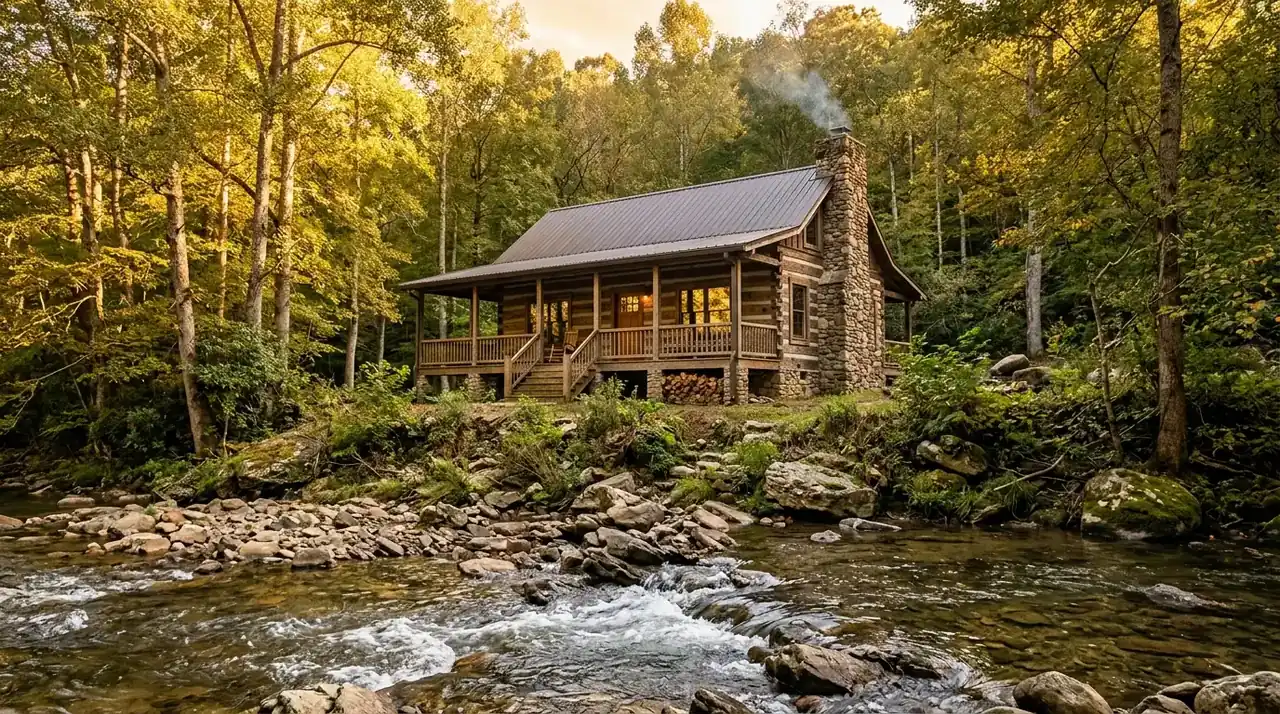
Homes on the Chestatee River range from rustic log cabins to custom mountain retreats. What a property is worth depends on acreage, condition, and how much river bank comes with the deed. River inventory is limited and listing data ages quickly, so get current pricing from a local agent. Most properties sit on wooded lots within 15 minutes of Dahlonega, GA.
The Chestatee River runs through Lumpkin County in North Georgia before reaching Lake Lanier. Homes along its banks, from log cabins to riverfront acreage, come up infrequently and attract serious interest from buyers who have been watching this market.
What types of homes come up on the Chestatee River?
Property types along the Chestatee cover more ground than people expect. Log cabins are the most common listing: usually one- to three-bedroom structures set back from the riverbank, often with a covered porch facing the water. Many were built between the 1970s and 1990s, and a fair number have been updated at least once since.
Custom-built homes are the other main category. Buyers who purchased raw land a decade or more ago sometimes built to spec, resulting in everything from modest three-bedroom houses to larger retreats with finished basements and multiple decks. Their lots often run closer to the water.
| Property type | What it usually looks like | How often it lists |
|---|---|---|
| Log cabin | One to three bedrooms, covered porch, set back from the bank | Most common |
| Custom-built home | Larger footprint, finished basement, multiple decks, lot closer to the water | Regular |
| A-frame or farm-style | Older construction, upper reaches near Auraria Road | Occasional |
| Undeveloped riverfront | Raw parcel with deeded frontage | Rare, moves fast |
The Chestatee River cabins guide goes deeper on cabin-specific ownership: construction types, typical age ranges, and what to watch for before you buy.
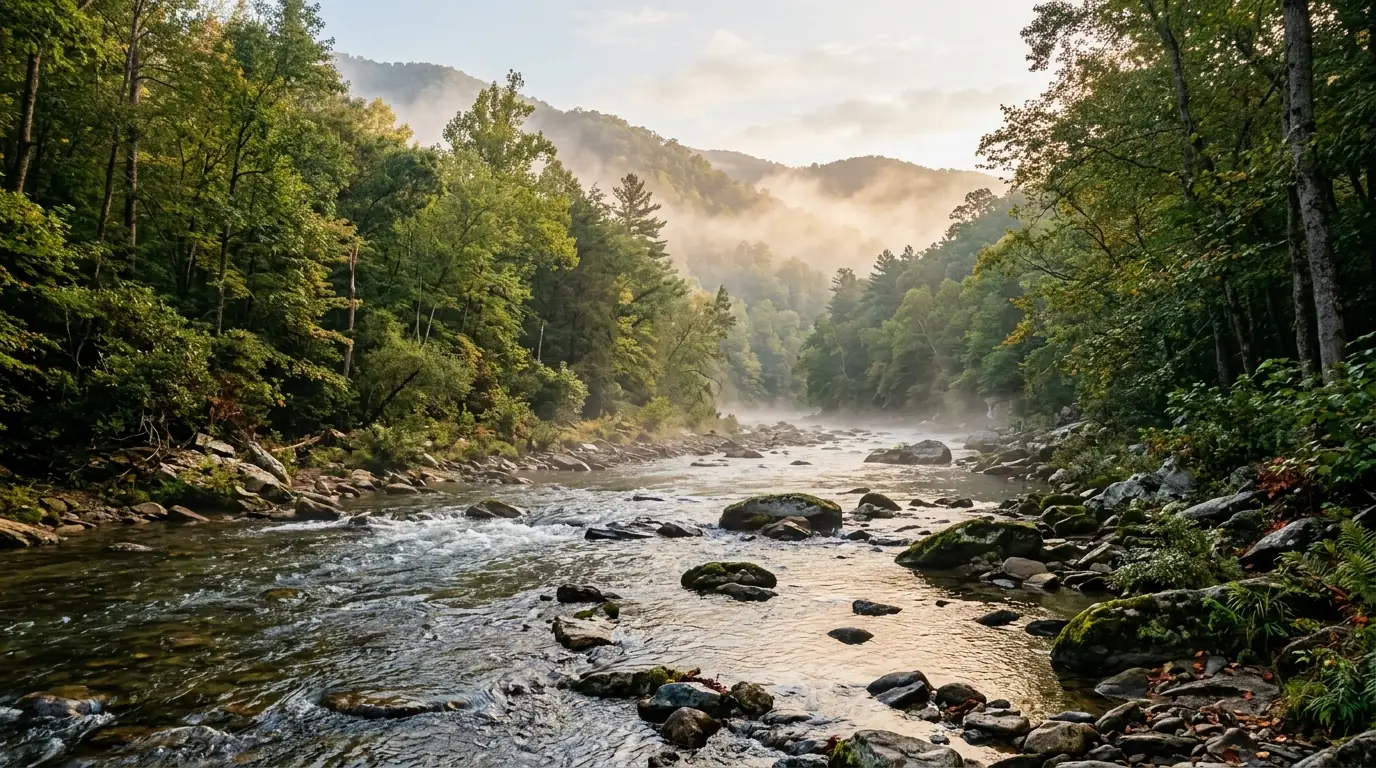
What river life on the Chestatee actually looks like
People who live along the Chestatee talk about the mornings. In spring and fall, fog comes off the water in layers. The sound of the current carries through open windows, and the light on the river shifts hour by hour depending on canopy cover.
This is not a remote, off-grid situation. Neighbors exist. The road following much of the river is paved. Cell service is variable but not absent. What the area offers is a quieter version of North Georgia mountain life, somewhere between a suburban neighborhood and a wilderness homestead.
The year-on-the-Chestatee guide covers what a full calendar year looks like, from spring flooding through winter quiet.
Practical things every buyer should know
Flood zone
Every parcel on the Chestatee has a FEMA FIRM flood map designation. Properties in Zone A or AE require flood insurance, which adds to annual carrying costs. Pull the current FIRM panel for any address you are seriously considering. Flood map revisions happen, and the designation can change between listing date and closing.
Well and septic
Municipal water and sewer are not available along most of the river corridor. Private well and septic are standard. Before making an offer, budget for a well water quality test and a septic inspection. Older systems serving original cabins may be undersized.
Log home maintenance
A large share of what comes up for sale on the Chestatee is log construction, which carries a recurring exterior maintenance cycle that a conventional house does not. Refinishing, sealing, and restaining is typically needed every three to five years, and the cost scales with the size of the structure and the scope of work. Get a written quote from a log-home contractor for the specific property and build it into your cost-of-ownership estimate.
Rental restrictions
If you plan to rent the property out at any point, verify HOA or community restrictions before you close. Rules vary by property and are not always disclosed upfront by sellers.
The FEMA FIRM panel for the exact address, a well water quality test, and a septic inspection. On this corridor these are not optional extras. They are the difference between a river property that works and one that costs you after closing.
The Chestatee River real estate overview has more on market dynamics and what buyers typically encounter along this corridor.
There is no single number. Price on this corridor tracks acreage, condition, and how much deeded river frontage comes with the property, and inventory is thin enough that published figures age quickly. Ask a local agent for current comparable sales before you anchor on any range.
How close are you to Dahlonega and the rest of North Georgia?
Most properties on the Chestatee sit within 10 to 15 minutes of Dahlonega by car. Dahlonega has a full grocery store, hardware stores, a regional hospital, breweries, restaurants, and the historic downtown Dahlonega square that draws visitors from across North Georgia year-round.
Gainesville, the largest city in the immediate region, is roughly 45 to 60 minutes south, depending on the specific address. Atlanta’s northern suburbs are 75 to 90 minutes away under normal traffic conditions. That range works for metro Atlanta buyers looking at second homes who want something that feels genuinely rural at the address.
The University of North Georgia is in Dahlonega, which keeps the area’s year-round population more stable than you would get in a purely seasonal mountain destination. That shows up in what stays open through the winter.
How often do homes on the Chestatee River come up for sale?
Not often. True river-access properties, those with deeded frontage or direct water access rather than just proximity to the river, are a small slice of the overall North Georgia market. When one lists, it tends to draw interest fast, especially from buyers who have been watching for a while.
Off-market sales are common. Property changes hands through estate sales, neighbor-to-neighbor deals, and word-of-mouth in ways that never show up in MLS data. If you are serious about this corridor, an agent relationship before something comes available matters more than a portal alert.
What to do first if you want to buy here
- Connect with an agent who tracks this corridorSomeone who hears about estate and neighbor-to-neighbor sales before they reach public listings.
- Set criteria, then set alertsDeeded frontage, acreage, and cabin versus custom build narrow the field quickly.
- Do the flood and systems homework earlyFIRM panel, well test, septic inspection, before you are under contract rather than during due diligence.
- Be ready to moveProperties with strong water access tend to draw multiple inquiries within the first few days.
The Chestatee River Georgia guide covers the river’s geography and history and explains what drives demand along this stretch.
Frequently Asked Questions
How much do homes on the Chestatee River cost?
Price varies with size, condition, acreage, and how much river frontage comes with the deed, and the spread between a small older cabin and a large custom build with significant frontage is wide. Confirm current pricing with a local agent, because this market moves and published data ages quickly.
Are there cabins for sale on the Chestatee River?
Yes. Log cabins are the most common property type on the corridor, ranging from one-bedroom retreats to updated three- and four-bedroom structures with modern kitchens and covered decks. Availability changes month to month.
Can you swim in the Chestatee River?
There are accessible spots, particularly in summer when water levels are stable. Conditions vary with rainfall. Check current Georgia EPD water quality advisories and respect any posted signs before getting in.
Is the Chestatee River good for fishing?
The lower river supports bass and bluegill. Upper sections near the headwaters include delayed-harvest trout water managed by Georgia DNR. You need a valid Georgia fishing license. Check current DNR regulations for seasons and bag limits before you fish.
Are Chestatee River properties in a flood zone?
Many are. FEMA designates portions of the Chestatee floodplain as Zone A or AE, which triggers mandatory flood insurance for federally backed loans. Whether a specific property falls in a regulated zone depends on elevation and position relative to the floodplain boundary. Pull the FIRM panel before you make an offer.
How far is the Chestatee River from Dahlonega?
Most properties are 10 to 15 minutes from central Dahlonega. Addresses at the far ends of the corridor add a few minutes. That proximity to town is part of what separates Chestatee properties from more remote North Georgia river land.
Do most Chestatee River properties have well and septic?
Yes. Municipal water and sewer are not available along the corridor. Private well and septic are standard. Inspect both before closing, especially on older structures.
What is the Chestatee River known for?
Mostly the 1829 gold rush and outdoor recreation. The river carried gold that sparked the first significant U.S. gold rush, predating California by twenty years and essentially building Dahlonega. On the recreation side, the Chestatee is fished for bass and trout and run for tubing and kayaking.
Are there gated communities on the Chestatee River?
A small number of private-road communities with shared river access exist along the corridor. The river is not dominated by HOA-governed subdivisions. Most properties are on individual county-road lots, and some areas have informal community associations without formal HOA governance.
Can I buy land on the Chestatee River?
Undeveloped riverfront parcels do come available, just not often. When they do, they move fast and at a premium that reflects how scarce true river-access land is in this part of North Georgia. An agent who tracks the corridor will hear about them before they hit public listings.
How often do river homes come up for sale?
A handful of true river-access properties list each year along the entire corridor, not a steady supply month to month. Properties with strong water access tend to draw multiple inquiries within the first few days.
What should I do first if I want to buy on the Chestatee River?
Connect with a local North Georgia buyer’s agent who tracks this corridor. They can set up MLS alerts for your criteria, tell you about off-market situations before they go public, and walk you through flood zone and well and septic details before you are under contract.
Looking for a home on the Chestatee River?
Work with the local brokerage that knows this corridor, the flood maps, and the properties that change hands before they ever reach a portal.
Find your next North Georgia home with Gold Peach Realtyor call (770) 283-1223
North Georgia Real Estate
Looking for Homes on the Chestatee River?
Gold Peach Realty are the local experts in Dahlonega and Lumpkin County real estate. Search riverfront properties, mountain cabins, and North Georgia homes.